
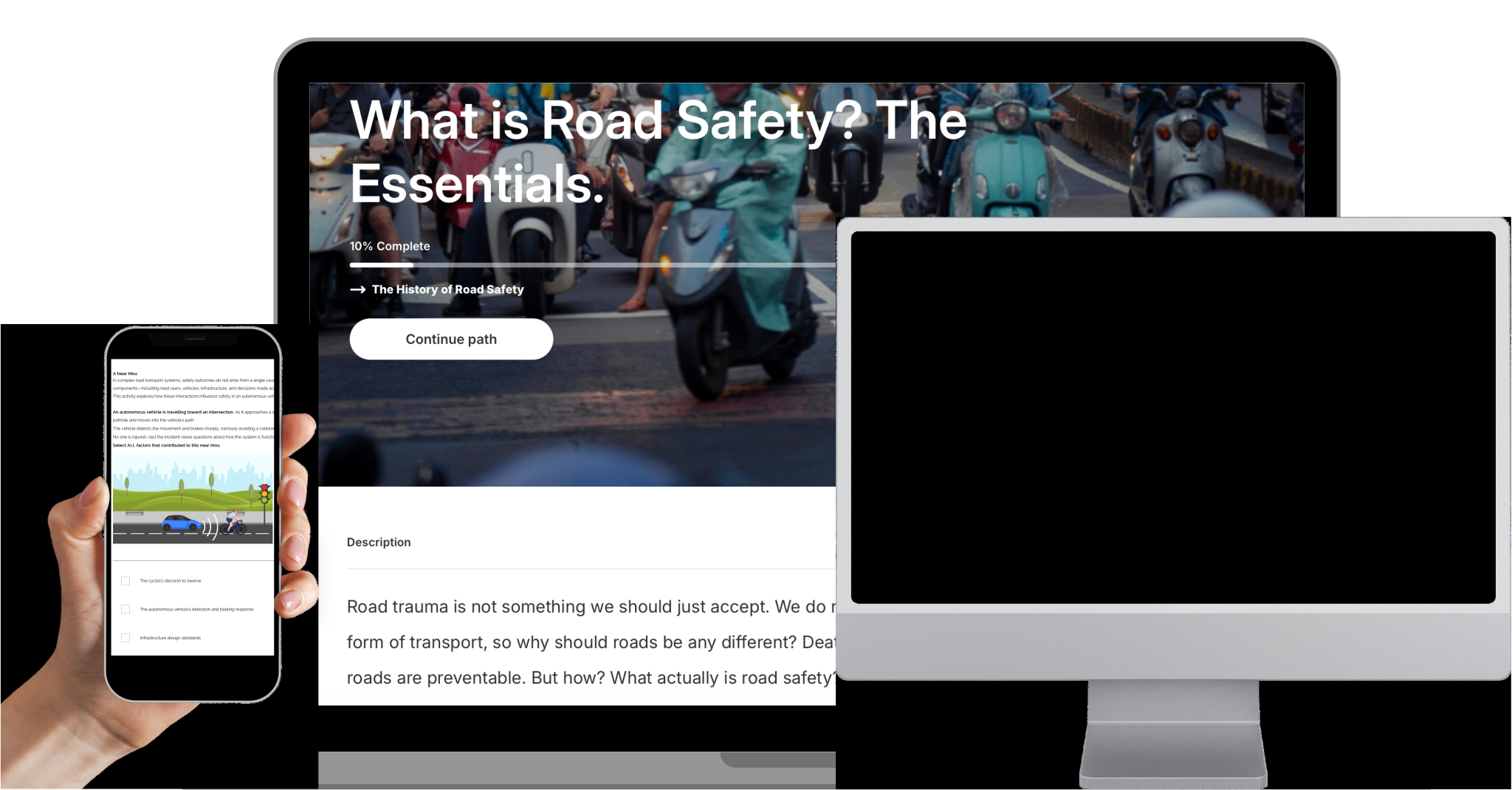
Road trauma is not something we should just accept. We do not accept trauma in any other form of transport, so why should roads be any different? Deaths and serious injuries on our roads are preventable. But how? What actually is road safety? What makes it complex? Why would you have a town planner, an engineer, a psychologist, a police officer and an emergency physician all involved?
This online, self-paced course – developed by the Australasian College of Road Safety – provides an overview of road safety – the road trauma problem and how we got to where we are, and what we can do to make positive changes.
If you are new to road safety, this course gives you the language, frameworks and evidence base to contribute with confidence from day one. For those experienced in road safety, this course will give you an understanding of where your work fits into the broader system and how the various areas of road safety can work together.
What you’ll learn
The course contains lessons from the Road Safety Body of Knowledge, and covers the core principles of road safety practice across 12 engaging and interactive lessons, including:
The History of Road Safety
The historical factors that have shaped responses to the global road safety problem, with particular emphasis on developments since the 1960s ; the hallmarks of the scientific approach to road safety, which emerged in the 1970s; how road safety is currently addressed at the global level, including the role of the key international bodies, organisations and coalitions, and some of the key lessons learnt from the history of road safety
Understanding the Global Road Trauma Crisis
The scale and nature of the global burden of road trauma; the relative contribution of road crashes to the global trauma burden of injury; the deficiencies in road crash fatality data and the lack of serious injury data, and variations in road trauma according to factors such as socio-demographics, regional location, road use types, and country income levels.
The Road Safety Profession
The scope and diversity of the road safety profession; the foundations of evidence-based road safety practice; how you can apply knowledge to practical road safety solutions; the importance of leadership, collaboration, and professional networks and the reciprocal relationship between practice and knowledge generation.
The Context of our Work in Road Safety
How road safety thinking has shifted beyond individual blame; the authority, responsibility and power held by organisations and institutions; how social, economic and cultural systems influence safety; why road safety must connect with broader public policy agendas and how systems-based analysis can identify new opportunities for improvement.
Road Users: Behaviour and Performance
The role of the human user in the road system, including different types of road users and how they interact with the road transport system; the capacities and limitations of human information processing that influence road user behaviour and safe or unsafe road use; how some factors can impair road user performance, including alcohol, drugs, distraction and inattention, and fatigue or sleepiness; how psychosocial and cultural factors influence road user behaviour, including personality, developmental stages, emotional states, and sociocultural context factors; and the importance of user-centred design in all elements of the road transport system.
Road Users: Understanding Error
The role of error in the road system; the factors that contribute to road user error and risk-taking within the road transport system, and how error can be minimised; the link between the development of skill and error likelihood; the concepts of error, risky behaviour, and risk-taking behaviour, and explain why these should be distinguished; the factors that contribute to both unintentional and intentional risk-taking within the road system; and how the prevention and management of road user error is a responsibility shared by multiple stakeholders.
Roads and Streets
The implications of the Safe System approach for how roads and streets are planned, designed, and managed; how infrastructure decisions influence the likelihood and severity of crashes, and road user exposure to risk; key design and operational features that support safety for different road user groups, including vulnerable road users; traditional design approaches vs Safe System-aligned practice and why the shift matters; how infrastructure safety approaches must be adapted for low- and middle-income country contexts; and how to apply knowledge of contemporary tools, guidelines, and frameworks that inform safer infrastructure development and management.
Vehicles
The role of vehicles in the road transport system; the relationship of vehicles to other system parts, including their social context, users, roads, and regulations; the position of vehicles within the Safe System approach to road safety; the broad range of vehicle types and their applications; and the differentiation between powered and unpowered vehicles and their typical users.
An Introduction to Systems Thinking in Road Safety
Defining systems thinking and explain its relevance to road safety; the key systems models and frameworks used in road safety research and practice and how to apply systems thinking principles to identify and address road safety challenges.
An Introduction to Prevention and Intervention
What prevention means in the context of road injury; the distinction between primary, secondary, and tertiary prevention measures; how public health and injury prevention frameworks have influenced road safety approaches; why equity, community priorities, and co-design are important in road injury prevention; how data systems support prevention, monitoring, and evaluation and why effective prevention requires multi-sectoral, systems-level approaches
Road Safety Management
Road safety management systems, their key elements, and how they can be given practical effect; the distinction between institutional management functions, interventions and results, and explain how they are inter-related; how road safety management practices influence delivery of interventions and achievement of results and mechanisms for diagnosing road safety management issues and for putting in place management interventions that rectify the diagnosed issues.
Who is this course for?
This course is designed for anyone working in or around road safety, who wants an understanding of how road safety works in practice. It is suitable for both those who are new to road safety, looking to gain a quick understanding of the issues, and those who have a deep understanding of a particular aspect of road safety, looking to gain a better understanding of the broader road safety system and context.
How it works
The course is delivered through Reach 360, our online learning platform. Once you purchase access, you’ll receive a separate invitation email from Reach 360 to set up your training account. The course is self-paced – work through it at a time that suits you. The course is made up of multiple lessons. Once you are ready to commence your training, you will have one month access, allowing plenty of time to complete them all.
The complete course provides over ten hours of professional development training. Once all lessons have been completed, you will receive a certificate.
Course Access Pricing
Pricing is tiered by World Bank income classification to ensure the course is accessible to road safety professionals across the globe. Member pricing is available to all current ACRS members.
If you’re not yet a member, joining ACRS before purchasing course access provides the best value option, so it’s worth considering — the membership discount is greater than the membership fee, plus you’ll gain access to the broader ACRS community, events and resources (including a generous discount to attend our major, annual in person event, the Australasian Road Safety Conference.
| Country Classification | Member Price | Non-Member Price |
|---|---|---|
| High Income Country (HIC) | $200 AUD | $500 AUD |
| Upper Middle Income Country (UMIC) | $96 AUD | $240 AUD |
| Lower Middle Income Country (LMIC) | $32 AUD | $80 AUD |
| Low Income Country (LIC) | $10 AUD | $40 AUD |
Prices are calculated automatically when you purchase access. All prices are in AUD and inclusive of GST where applicable. LMIC/LIC pricing is subsidised for residents of qualifying countries as defined by the World Bank income classification. If you are from an LMIC or LIC country but are currently living and working in a high income country, the HIC rate applies. If you have questions about which tier applies to you, contact admin@acrs.org.au.
Already an ACRS member?
Member pricing is applied automatically when you’re logged in. If you’re an ACRS member and you’re seeing non-member pricing, make sure you’re logged into your ACRS account before proceeding to checkout.
Are you a student?
Full-time students are eligible for ACRS Student Membership, which includes access to member pricing on this course. Student membership also connects you to your local ACRS Chapter, mentorship opportunities and a network of road safety professionals at the start of your career.
Team Enrolments
Looking to enrol your team? Discounted registrations are available for 10 or more people. Enquire using the form, below, and we’ll get back to you.
Contact Course Bulk Enrolments
Questions?
Contact our membership team using the form below and we’ll get back to you.