Story and photos by Michael Timms, ACRS NSW Chapter Chair
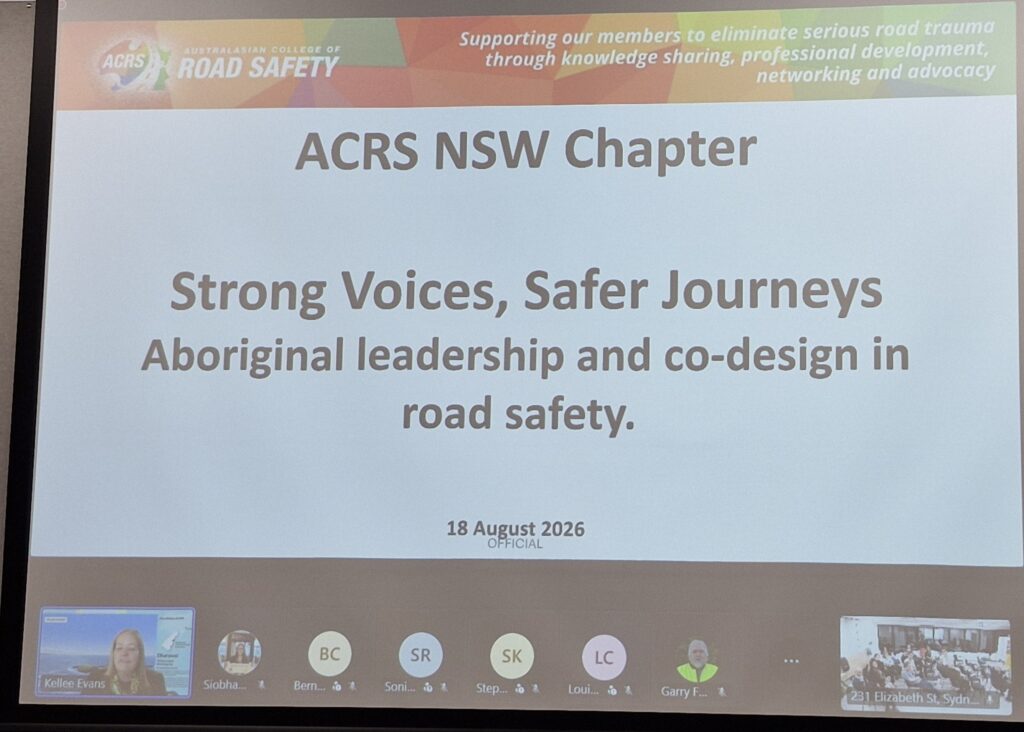
In their final event prior to hosting the Australasian Road Safety Conference in October, the ACRS NSW Chapter highlighted the work and experience of four leaders in Indigenous safety. Strong voices, Safer Journeys investigated co-design, which places Indigenous knowledge and perspectives at the heart of decision making.
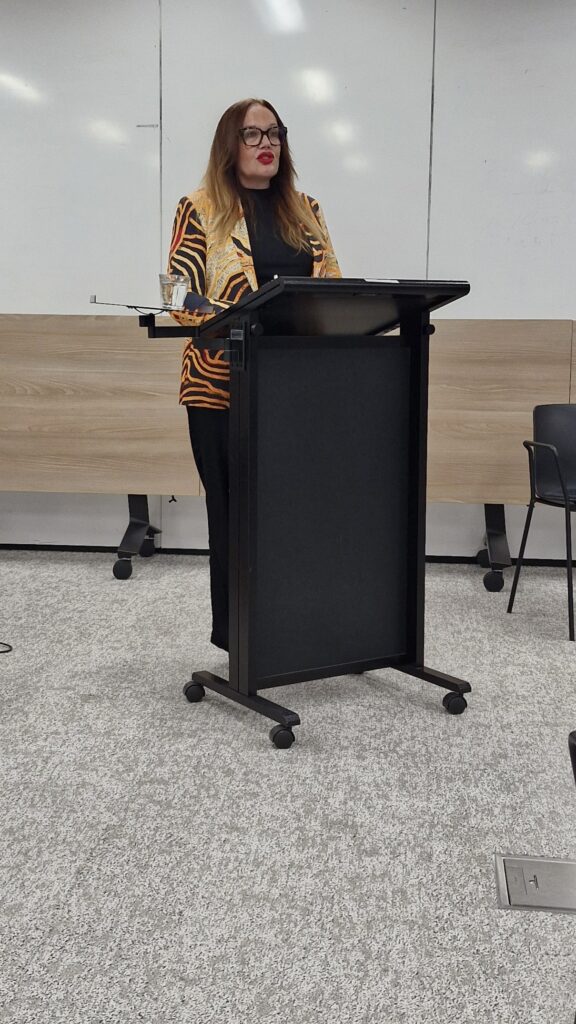
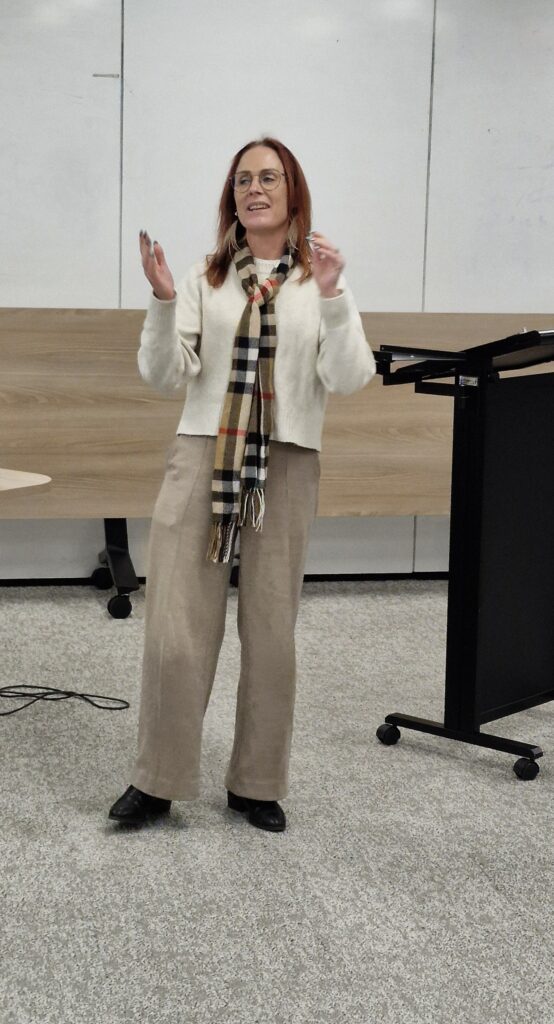
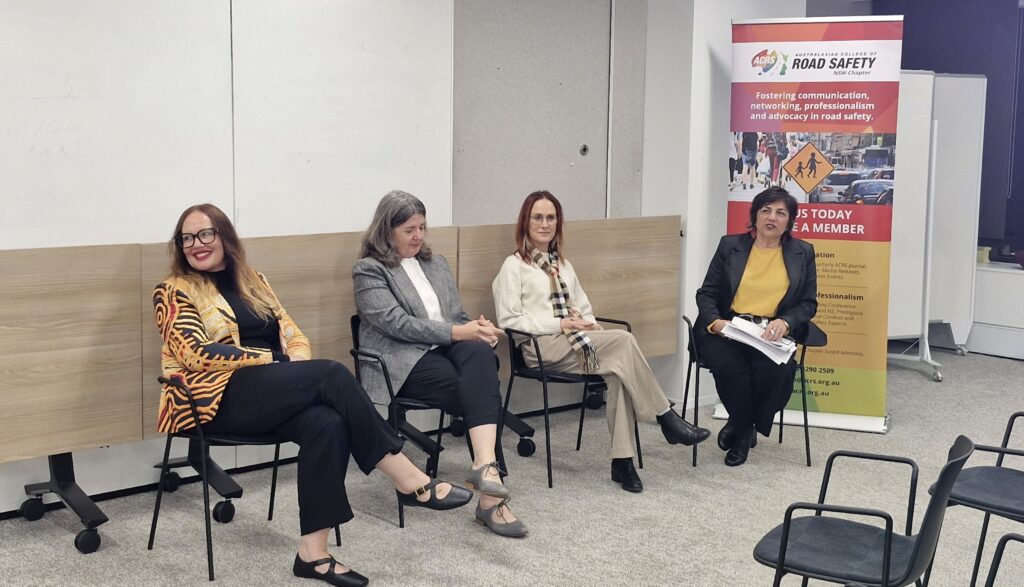
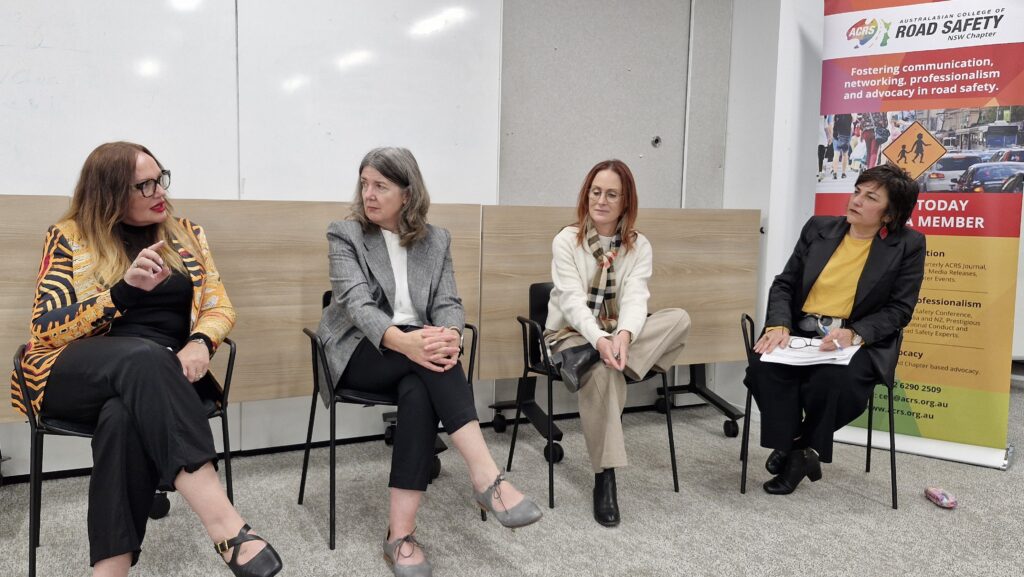
Taking place on Tuesday, 18 August 2026, with the kind assistance of Transport for NSW, Dr Tasha Prabhakar, NSW Chapter Deputy Chair, hosted Jaymee Beveridge, TfNSW Director Aboriginal Outcomes, Kellee Evans, Senior Manager, TfNSW Aboriginal Strategy and Advancement, A/Prof Courtney Ryder, Flinders University South Australia, and Scientia Prof Rebecca Ivers, UNSW.
Jaymee, Kellee and Courtney are proud Indigenous women, and Rebecca has spent her career working with First Nations peoples including in remote communities. The event was free for Aboriginal & Torres Strait Islander attendees.
The argument was made about moving beyond a “deficit” view of Aboriginal road safety, i.e., what is wrong, and moving towards thinking about what is strong and how can that be built upon.
“Less often, we have been given the authority to make decisions ourselves about what safety looks like,” Jaymee Beveridge said.
Jaymee explained the difficulty with “sitting around a table when the table was never designed to accommodate Aboriginal voices.”
Kellee Evans said, “mobility is about access, education, employment, and opportunity, and ultimately, self-determination.
“Co-design is a commitment to Aboriginal ways.”
Kellee gave an example of improved outcomes for Higher School Certificate attainment through solutions informed by the students they were intended to serve.
“The principles are relevant to road safety – have we asked community what success looks like to them?” Kellee asked.
Courtney Ryder spoke about a research project involving compulsory third-party insurance, and how the project was enhanced through artwork specifically designed by a local artist. Sharing research isn’t just about publications and reports, but translating knowledge to respect story, lived experience, and culture.
“Storytelling can be powerful,” Jaymee added.
Challenging jurisdictions to work on new approaches to Aboriginal road safety, Courtney said that “sometimes, it only takes one state to change something.”
Rebecca Ivers spoke about working with communities on the TfNSW Driver Licensing Access Program (DLAP).
“Driver licensing is the priority,” Rebecca said, explaining the benefits which flow from that.
“Youth workers adapted (the program) to the local needs. In one area, the priority was obtaining documentation and ID, but in another, it was getting learner driver hours up.”
“We are not a homogeneous people,” Kellee added.
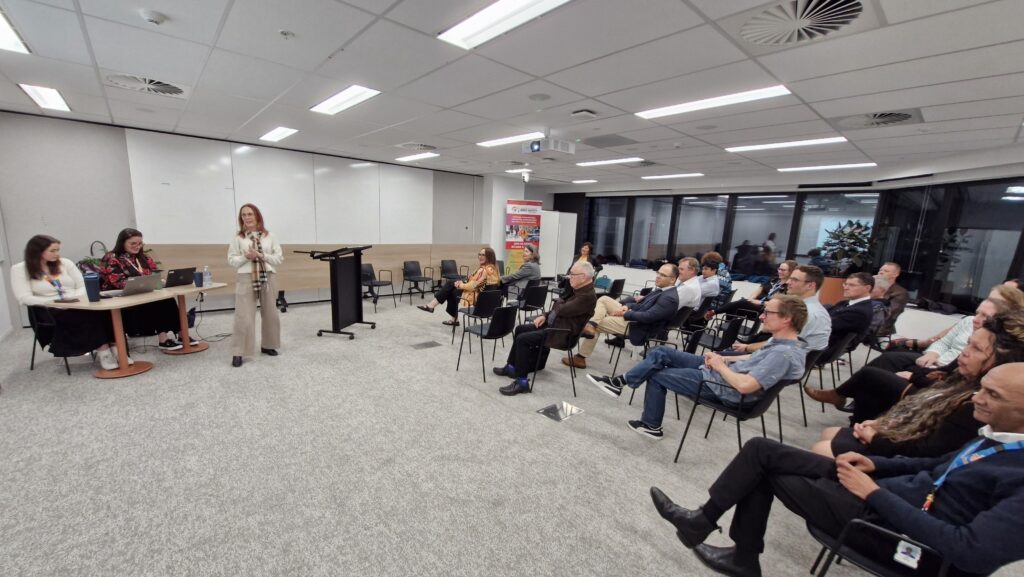
The forum was attended in-person by 22 people, with a further 36 watching online.
ACRS NSW Chapter Chair, Mick Timms, paid tribute to the people behind the forum.
“Rebecca and UNSW organised for Courtney to travel from Adelaide for this forum at no cost to ACRS,” Mick said.
“I’m also grateful to Tasha who did a great job hosting this all-female forum, as well as fellow NSW Chapter committee member David Wakelin, who worked with TfNSW’s Siobhan Marren to bring the idea behind this forum to life.
“NSW Chapter prides ourselves on delivering quality forums of significance to the road safety community and I hope this is the first of many ACRS events which will champion co-design and Aboriginal road safety.”